Viewing Room | Malcolm Morley

12 Февраля - 22 Апреля 2021
  • Malcolm Morley (1931, London, UK — 2018, New York, USA)
    Malcolm Morley (1931, London, UK — 2018, New York, USA)
    Malcolm Morley (1931, London, UK — 2018, New York, USA)
    Malcolm Morley (1931, London, UK — 2018, New York, USA)
    Malcolm Morley (1931, London, UK — 2018, New York, USA)

    Malcolm Morley

    (1931, London, UK — 2018, New York, USA)

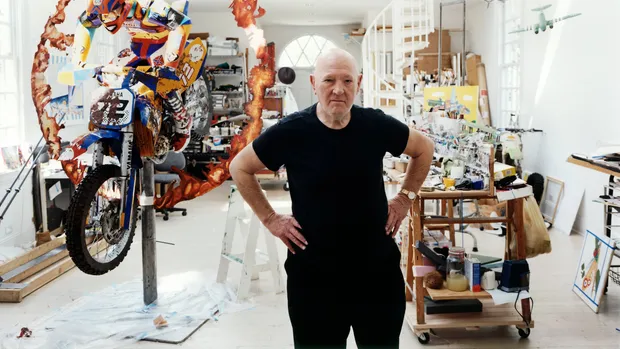
  • Malcolm Morley is known for his continual pictorial innovations throughout the course of his fifty-year painting career. Born in Britain,...
    Malcolm Morley is known for his continual pictorial innovations throughout the course of his fifty-year painting career.

    Born in Britain, Morley moved to New York in 1958. In the mid 1960s, Morley briefly taught at Ohio State University, and then moved back to New York City, where he taught at SUNY Stony Brook and the School of Visual Arts.

    Over the course of his distinguished career, Morley defied stylistic characterization, moving by turns through so-called abstract, realist, neo-expressionist, and neo-romantic painterly modes, while being attentive to his own experiences. Working through these styles, Morley developed a method for linking theories of abstraction with a realistic pictorial subject in super-realism, a movement that he is credited with founding.
  • Malcolm Morley won the Turner Prize, London, in 1984 and has exhibited internationally throughout his career. The artist's works were presented at numerous exhibitions in Europe and North America, including the Center Pompidou (Paris), The Museum of Contemporary Art (North Miami), Ashmolean Museum (Oxford), Hall Art Foundation (Reading, Vermont) and many others.

  • Works
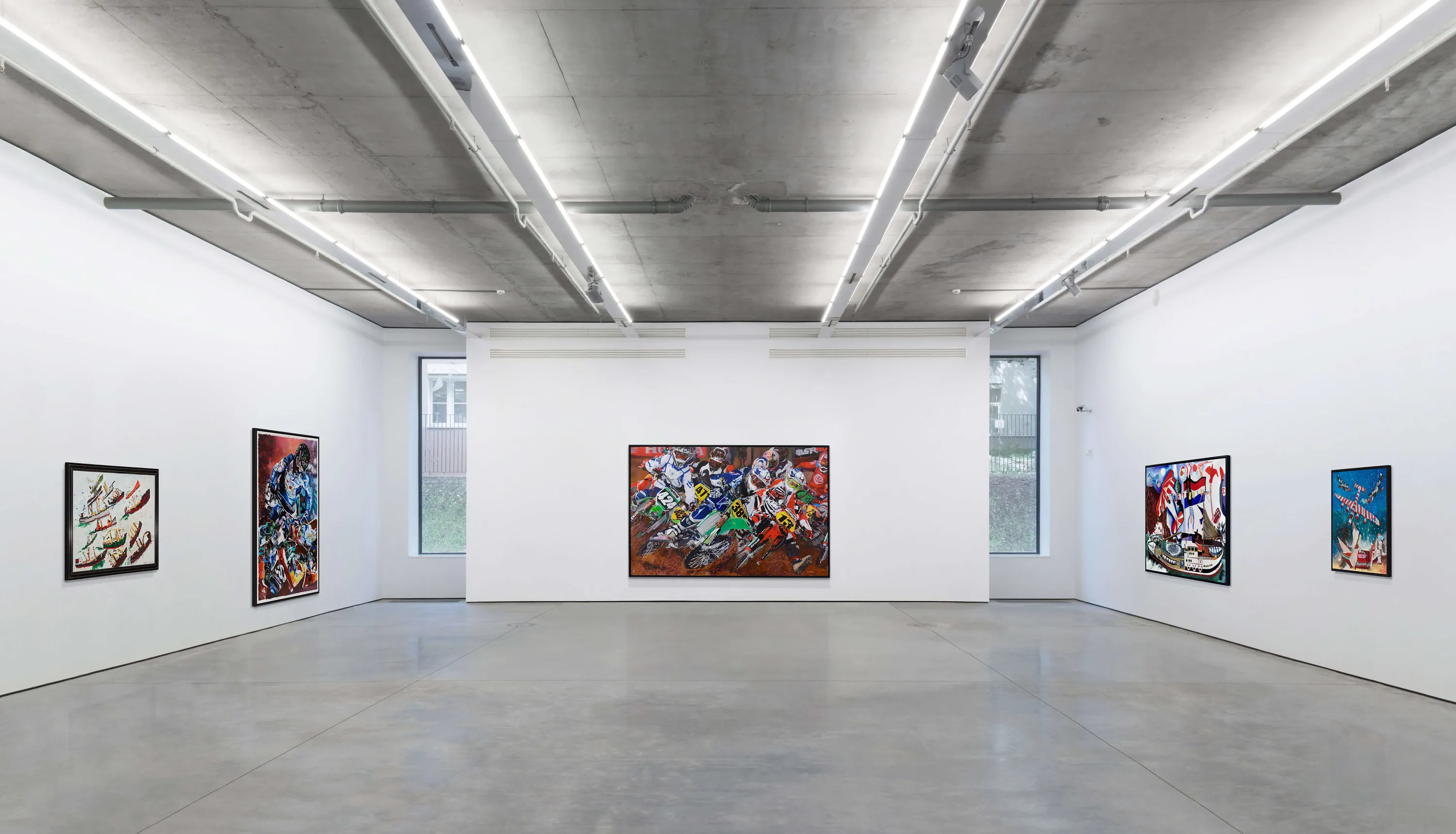
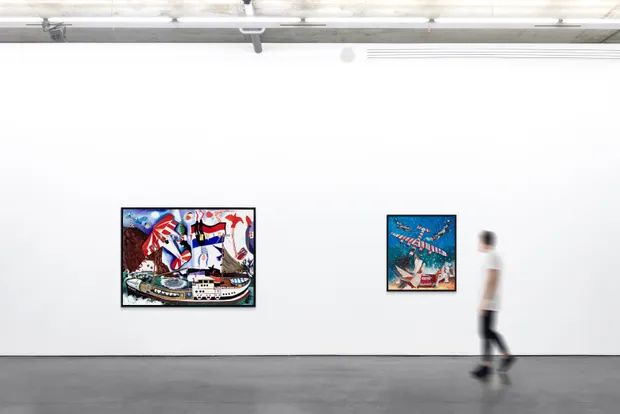
    • Malcolm Morley Regatta, 2012 Oil on linen with paper and rope attachments 133,3 × 182,9 cm
      Malcolm Morley
      Regatta, 2012
      Oil on linen with paper and rope attachments
      133,3 × 182,9 cm
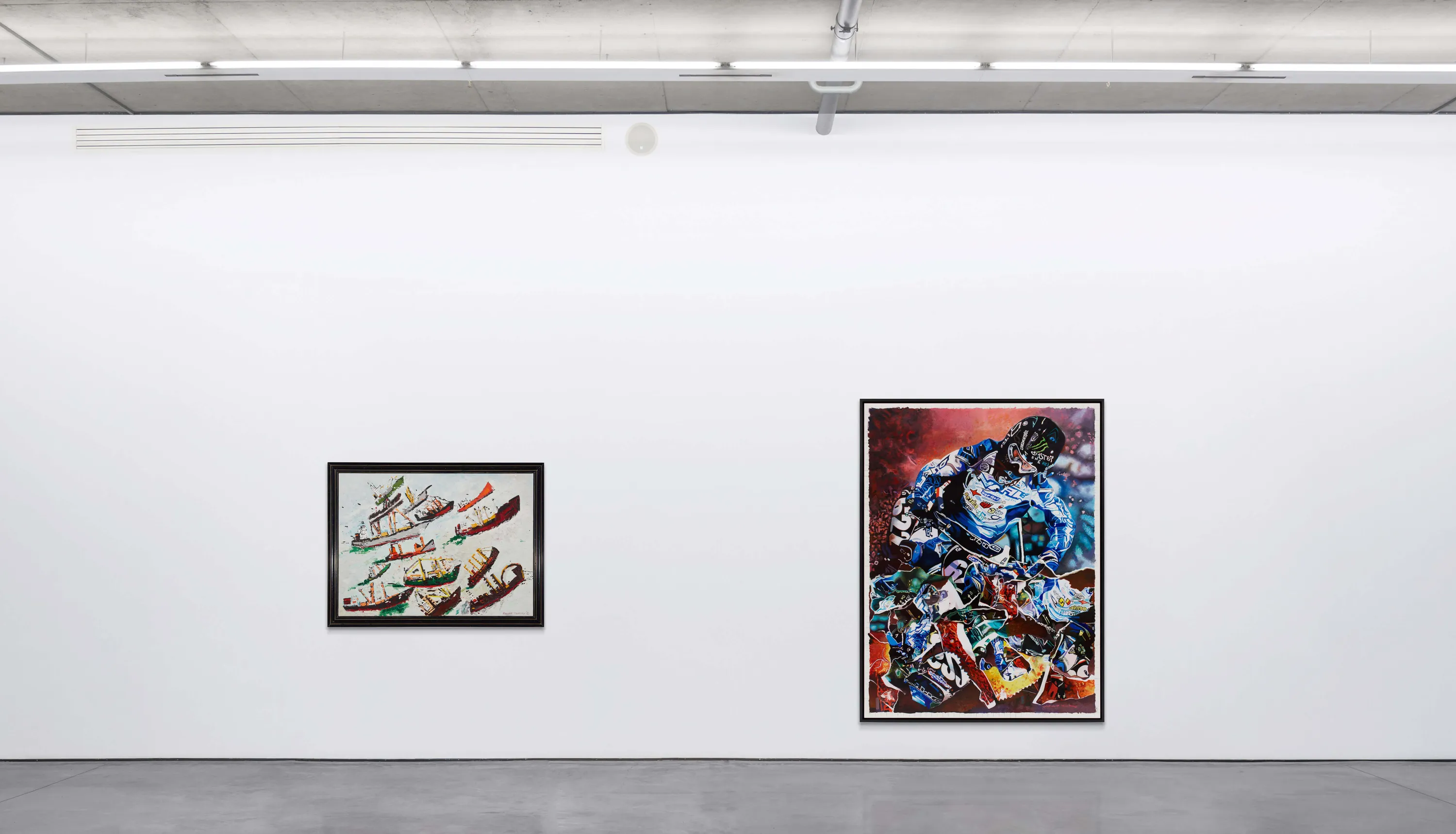
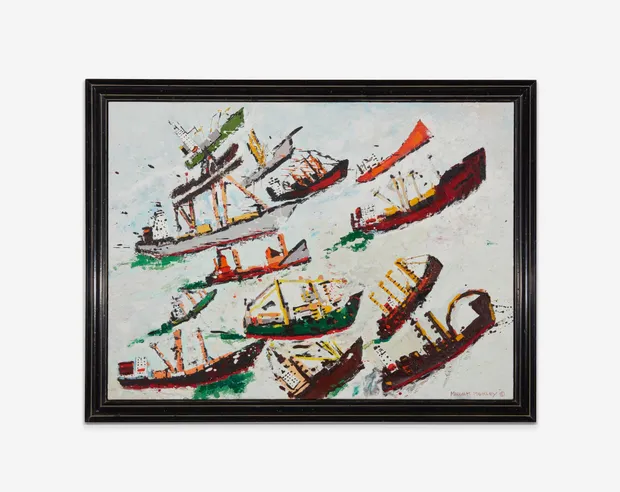
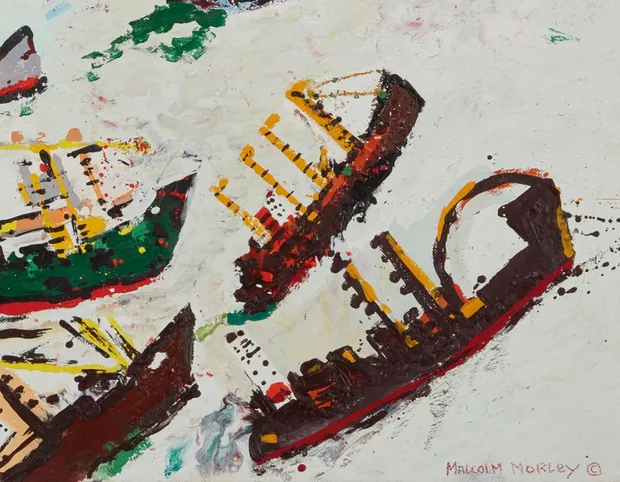
  • Malcolm Morley. Convoy, 1995

    Signed, oil and wax encaustic on canvas

    96,5 x 132 cm

    111,1 x 146,7 cm (framed)


    "Images of cargo ships harks back to when he was a small boy seeing a Greek freighter grounded on the rocks in Tankerton Bay, Kent. As for the models that he paints on the canvas, he first builds them himself  as if making up for lost time, his boyhood passion." – The Guardian, 2001.

  • 'I'm very involved with the idea of the vividness of childhood, of being in touch with an incredible vividness of... 'I'm very involved with the idea of the vividness of childhood, of being in touch with an incredible vividness of... 'I'm very involved with the idea of the vividness of childhood, of being in touch with an incredible vividness of... 'I'm very involved with the idea of the vividness of childhood, of being in touch with an incredible vividness of...

    "I'm very involved with the idea of the vividness of childhood, of being in touch with an incredible vividness of experience as a young boy. To become an adult, culture teaches you to bury and repress all that. But if you can find access to it as a mature adult, it's a tremendous source of material."

    – Malcolm Morley

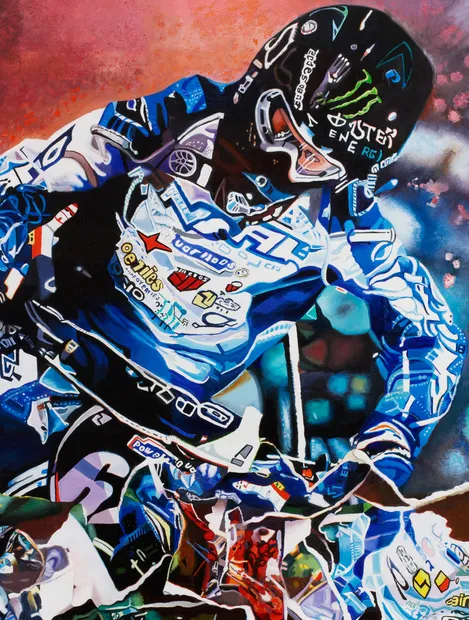
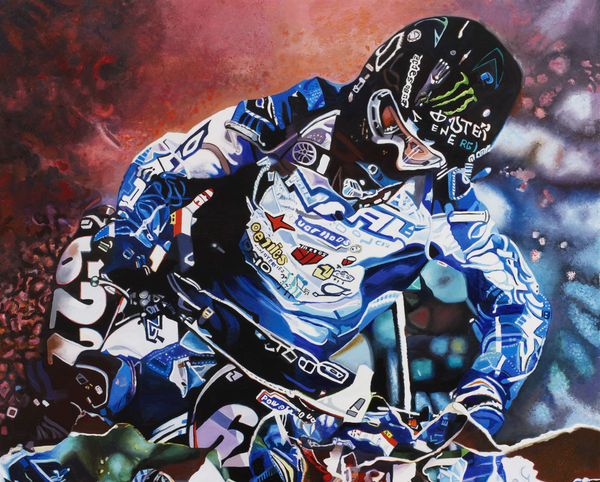
  • Malcolm Morley. Thor, 2008

    Oil on linen with cloth and rubber glove attachment

    213,4 x 160 cm / 219,6 x 166,4 cm (framed)

  • Thor, 2008, emerges as a unique blend of Morley's Super-realism and Neo- expressionist styles - a testament to artist's continually... Thor, 2008, emerges as a unique blend of Morley's Super-realism and Neo- expressionist styles - a testament to artist's continually... Thor, 2008, emerges as a unique blend of Morley's Super-realism and Neo- expressionist styles - a testament to artist's continually... Thor, 2008, emerges as a unique blend of Morley's Super-realism and Neo- expressionist styles - a testament to artist's continually...

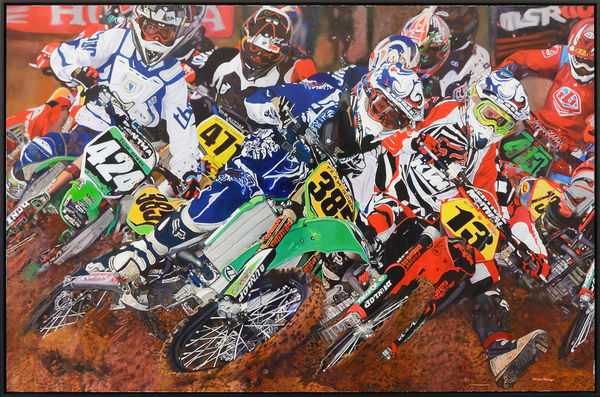
    Thor, 2008, emerges as a unique blend of Morley's Super-realism and Neo- expressionist styles - a testament to artist's continually evolving painting format. Morley portrayed the motocross rider as a mythic hero, depicting a contemporary mythology in paint. The penciled grid at the edges and scattered bits of paper beneath the racer subvert Morley's photorealistic approach. An authentic racing glove (crafted by the famous moto gear manufacturer 'Thor Motocross') pinned to the painting's lower right corner further emphasizes the racer's ethereal nature.

  • Malcolm Morley. Convoy, 1995 / Thor, 2008 © Gary Tatintsian Gallery and the artist


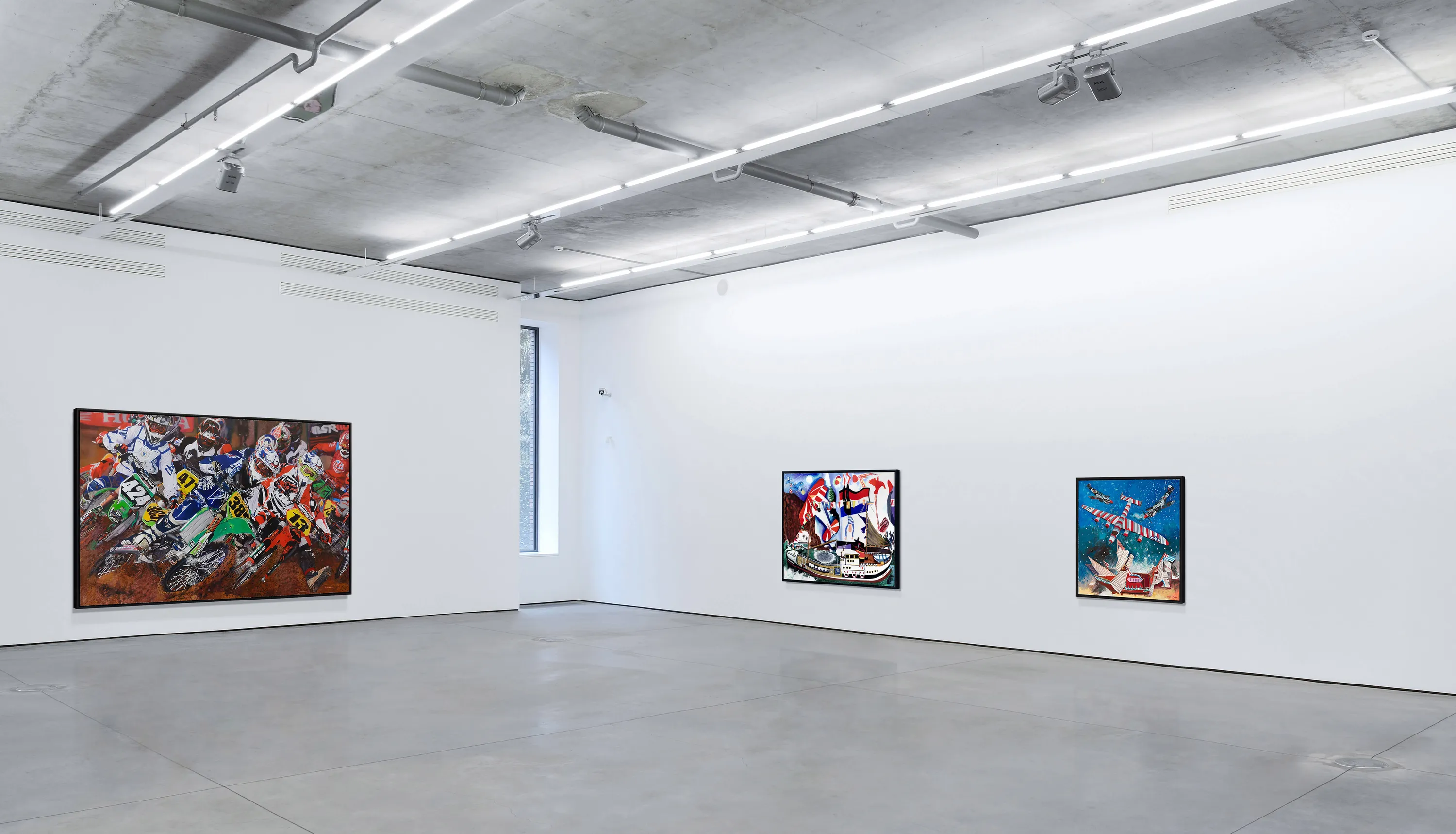
  • Malcolm Morley. Texas Swing, 2009

    Oil on linen | 198,1 x 298,5 cm

    204,5 x 304,8 cm (framed)

  • Describing the evolution of the series inspired by motocross, Malcolm Morley wrote: 'While waiting for a train in Pennsylvania Station,... Describing the evolution of the series inspired by motocross, Malcolm Morley wrote: 'While waiting for a train in Pennsylvania Station,... Describing the evolution of the series inspired by motocross, Malcolm Morley wrote: 'While waiting for a train in Pennsylvania Station,... Describing the evolution of the series inspired by motocross, Malcolm Morley wrote: 'While waiting for a train in Pennsylvania Station,...

    Describing the evolution of the series inspired by motocross, Malcolm Morley wrote:


    "While waiting for a train in Pennsylvania Station, I came across a motocross magazine with a cover featuring a young motocross rider and a colorful bike in midair doing an impossible maneuver in a sky. For me that is the modern myth. A myth has to have a hero. A hero has to face danger and death."

  • Malcolm Morley. Texas Swing, 2008 © Gary Tatintsian Gallery
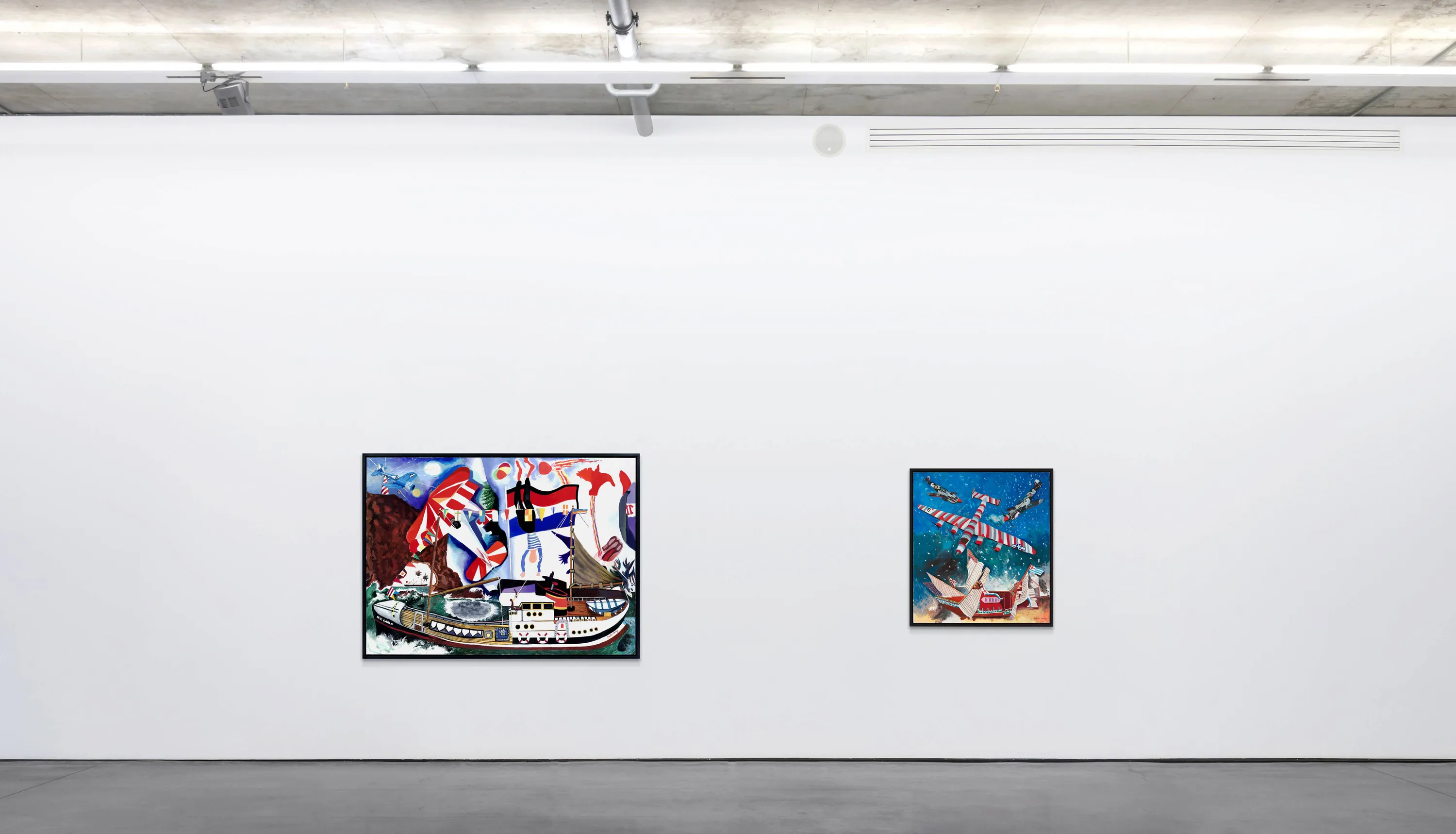
  • Malcolm Morley. Regatta, 2012

    Oil on linen with paper and rope attachments | 133,3 x 182,9 cm


    In the 1990s, Morley revisited the maritime themes that had marked his early career, now interwoven with fighter planes that he painstakingly crafted from paper, painted in watercolor, and affixed to the canvas. This integration of sculptural elements, which he described as a “three-dimensional plane,” underscored his ongoing exploration of the boundaries between representation and physical space.
  • Rather than merely replicating past motifs, Morley reimagined them through the lens of memory and abstraction, using painted models as... Rather than merely replicating past motifs, Morley reimagined them through the lens of memory and abstraction, using painted models as... Rather than merely replicating past motifs, Morley reimagined them through the lens of memory and abstraction, using painted models as... Rather than merely replicating past motifs, Morley reimagined them through the lens of memory and abstraction, using painted models as... Rather than merely replicating past motifs, Morley reimagined them through the lens of memory and abstraction, using painted models as...

    Rather than merely replicating past motifs, Morley reimagined them through the lens of memory and abstraction, using painted models as both subjects and conceptual anchors. Rejecting the idea of these objects as mere “toys,” he instead recognized them as conduits of cultural and psychological significance: “There is an unconsciousness in society that comes out in its toys. Toys represent an archetype of the human figure.” In transforming these everyday forms into painterly constructions, Morley bridged the personal and the universal, revealing the latent narratives embedded within objects of play, war, and spectacle.

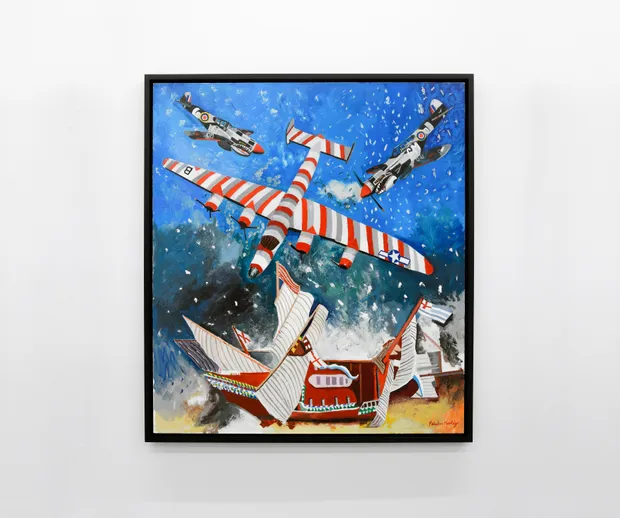
  • Malcolm Morley. The Island of the Day Before Regained, 2013

    Oil on linen | 101 x 92 cm / 106,5 x 97 cm (framed)


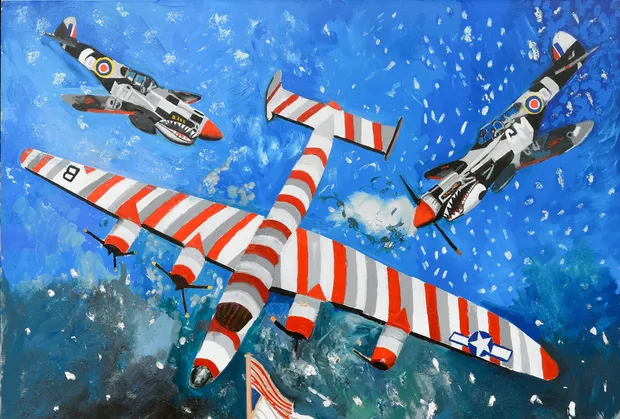
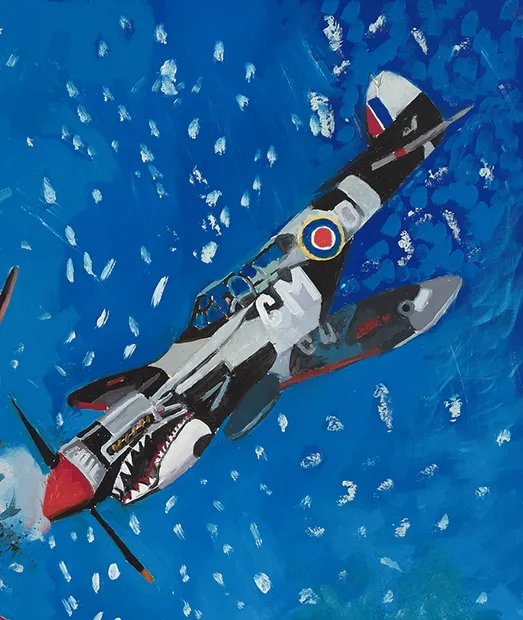
    The Island of the Day Before Regained (2013) presents a dramatic aerial scene: two German Messerschmitts pursue a U.S. Army bomber, poised on the brink of collision with a Man-O-War ship. The absence of a horizon line creates a disorienting perspective, immersing the viewer in a dive-bombing trajectory toward the central aircraft and the stranded sailing vessel—both depicted from above.

  • Ship masts, airplane insignia, ocean waves, and fluttering flags—Morley revels in the intricacy of his compositions, layering visual complexity upon... Ship masts, airplane insignia, ocean waves, and fluttering flags—Morley revels in the intricacy of his compositions, layering visual complexity upon... Ship masts, airplane insignia, ocean waves, and fluttering flags—Morley revels in the intricacy of his compositions, layering visual complexity upon... Ship masts, airplane insignia, ocean waves, and fluttering flags—Morley revels in the intricacy of his compositions, layering visual complexity upon... Ship masts, airplane insignia, ocean waves, and fluttering flags—Morley revels in the intricacy of his compositions, layering visual complexity upon...

    Ship masts, airplane insignia, ocean waves, and fluttering flags—Morley revels in the intricacy of his compositions, layering visual complexity upon complexity. His meticulous approach to painterly illusion is encapsulated in his own words:


    "My eyes look at an object and translate it into what I call ‘painterliness,’ which is pre-imagining the object has already been painted in my mind. It’s a continuous rehearsal of looking at the world as if it’s made of paint." – Malcolm Morley

  • Malcolm Morley. Regatta, 2012 | The Island of the Day Before Regained, 2013 © Gary Tatintsian Gallery

     
  • FIND OUT MORE

  • VIEWING ROOMS